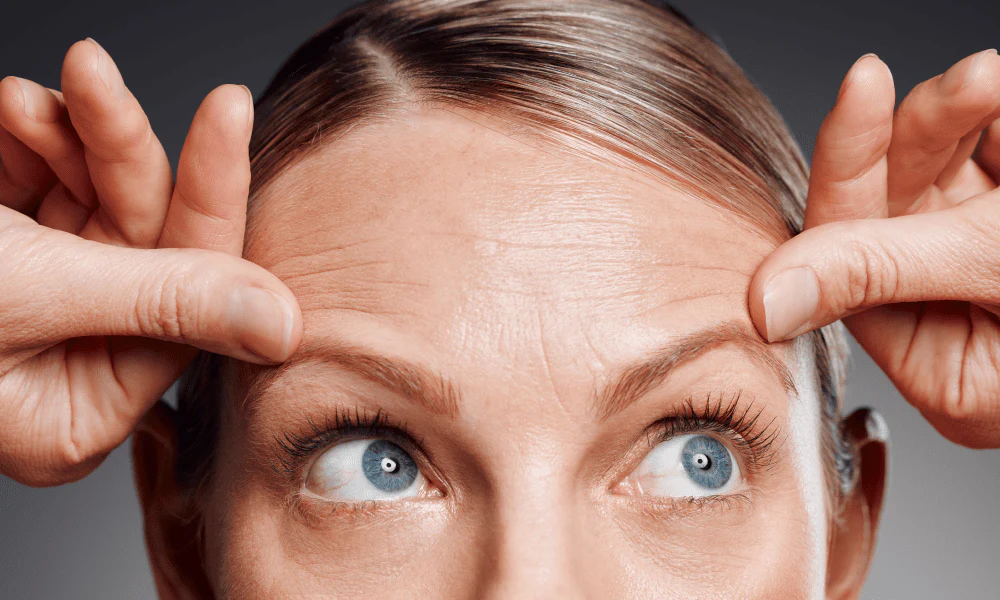
Lines across your forehead can add years to your appearance. These creases form from repeated expressions and natural ageing. Many effective methods can help smooth your forehead without dramatic changes to your look.
Why Forehead Creases Develop
Understanding what creates these lines helps you choose the right treatment approach. Multiple factors work together to create visible creases.
Expression Lines and Muscle Movement
Your forehead muscles contract every time you raise your eyebrows or squint. Years of these movements create grooves in your skin.
The skin folds in the same places repeatedly. Over time, these temporary lines become permanent creases that stay visible even when your face is relaxed.
Ageing and Skin Changes
Collagen and elastin keep your skin smooth and bouncy. Your body produces less of these proteins as you age.
Without enough support, your skin can’t spring back after being folded. The creases become deeper and more obvious over the years.
Sun damage speeds up this process significantly. UV rays break down collagen faster than natural ageing alone.
Lifestyle Factors
Smoking reduces blood flow to your skin and damages collagen fibres. This makes wrinkles form earlier and deeper than they otherwise would.
Dehydration affects how plump and smooth your skin appears. When you’re not drinking enough water, lines look more pronounced.
Poor sleep prevents your body from repairing skin damage properly. Stress hormones can also break down collagen over time.
At-Home Forehead Crease Reduction Methods
Simple daily habits can slow the formation of new lines. Some methods even improve existing creases with consistent use.
Skincare That Makes a Difference
Retinol increases cell turnover and boosts collagen production in your skin. Apply it at night to see gradual improvement in line depth.
Start with a low concentration to avoid irritation. Your skin needs time to adjust before you increase the strength.
Peptide serums signal your skin to produce more collagen. Regular use can make creases less obvious over several months.
Hyaluronic acid plumps your skin by attracting and holding moisture. This temporarily softens the appearance of forehead lines.
Sunscreen prevents further damage that would deepen existing creases. Apply it every morning regardless of the weather outside.
Facial Massage and Exercise
Gentle upward massage helps improve circulation to your forehead. Better blood flow supports healthy skin repair and renewal.
Use your fingertips to smooth from your eyebrows toward your hairline. Apply light pressure and repeat several times daily.
Face exercises that work against gravity may help strengthen underlying muscles. Some people find this reduces the depth of their creases over time.
Sleep Position Adjustments
Sleeping on your back prevents your face from pressing into your pillow. Side sleeping can create additional creases and worsen existing ones.
Special pillows designed to reduce facial contact can help. Even without special equipment, training yourself to sleep on your back makes a difference.
Professional Treatment Options
When home care isn’t enough, professional forehead crease reduction treatments offer stronger results. Several options work without surgery or long recovery times.
Injectable Treatments
Muscle relaxing injections temporarily stop the movements that create forehead lines. Your muscles can’t contract as strongly after treatment.
This allows existing creases to soften while preventing new ones from forming. Results typically last three to four months before you need another session.
The treatment takes about ten minutes with minimal discomfort. You can return to normal activities immediately after your appointment.
Dermal Fillers for Deep Lines
Fillers add volume directly into deep creases to smooth them out. A professional injects them beneath the line to lift the indented skin.
This approach works well for static lines that remain visible when your face is relaxed. Results appear immediately and last six to twelve months.
Fillers complement muscle relaxing treatments when used together. One prevents movement while the other fills existing depth.
Laser Resurfacing
Fractional lasers create tiny injuries in your skin to trigger healing. Your body responds by producing fresh collagen in the treated areas.
Multiple sessions provide gradual improvement in crease depth and skin texture. Each treatment requires a few days of mild redness and flaking.
This option addresses both lines and overall skin quality. The results develop slowly over several months after your final session.
Radiofrequency Treatments
Radiofrequency energy heats the deeper layers of your skin without damaging the surface. This stimulates collagen production and tightens loose tissue.
The forehead crease reduction from radiofrequency happens gradually over time. Most people need several treatments spaced a few weeks apart.
You feel warmth during the procedure but no significant pain. There’s no downtime required after each session.
Chemical Peels
Peels remove damaged surface skin to reveal smoother layers underneath. Stronger peels reach deeper to address more significant creasing.
Light peels require no recovery time and improve texture gradually. Medium peels need a few days of healing but provide better results.
Regular peel treatments can maintain smoother skin and prevent new lines. They work well as part of an ongoing maintenance plan.
Building Your Treatment Strategy
Assess how deep your creases are before choosing a method. Fine lines respond well to good skincare and preventive measures.
Moderate creases often need professional forehead crease reduction treatments for visible improvement. Deep lines may require a combination of approaches.
Start with less intense options and progress if needed. Many people find success with consistent skincare and periodic professional treatments.
Protection from sun damage remains critical regardless of other treatments. UV exposure will undo your progress and create new lines faster.
Stay consistent with whatever approach you choose. Forehead lines took years to form and need ongoing care to improve and maintain.