

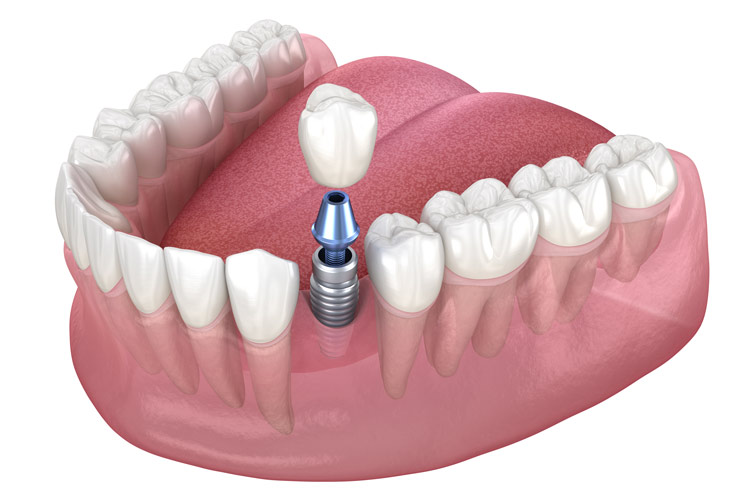
Dental implants are the artificial tooth roots that are used to support a restoration for missing teeth. The dental implant procedure is considered both a prosthetic and cosmetic procedure. Individuals who have lost a tooth (or more) often feel self-conscious when eating, smiling, or talking.
Not only that, biting irregularities caused by a missing tooth can also have a negative impact on one’s eating habits. At times, it can even lead to other health problems like malnutrition. When the missing teeth are replaced using dental implants, they can eat their favorite foods again without any struggle.
In addition, dental implants can also help retain and stimulate the jawbone so bone loss is avoided and your facial features are effectively supported.
Dental Implant Procedure: What to Expect
To determine if dental implants are good for you, you need to consult with your dentist or oral surgeon. During the consultation, your gums and teeth will be examined and assessed. The density and quality of your bone will also be evaluated.
X-rays and computer tomography (CT) scans may also be requested to check if there is enough bone structure to support the dental implants. The dentist will also figure out where the dental implants will be situated.
From there, your dentist will create a customized treatment plan based on the following key factors:
- Personal habits
- Oral hygiene
- Condition of the oral tissues
- Commitment to practicing aftercare instructions
Those with insufficient bone will require a bone graft. When applicable, using mini dental implants might also be recommended.During the consultation process, the dentist will also give you a timeline of the treatment process from start to finish. During the initial consultation, anesthesia options will also be discussed.
When needed and applicable to your case, sedation might be considered or recommended. You can also ask about the approximate cost of the procedure during the consultation phase. Dental implant cost can differ from one patient to another depending on several factors.
Before the Dental Implant Procedure
If you have underlying health issues, it needs to be managed first before the dental implant procedure can commence. Prevalent issues such as tooth decay and gum disease can make the dental implant treatment less effective.
If you are a heavy smoker, your dentist will likely recommend that you quit smoking first as it can also impact the effectiveness of the treatment. Smoking has also been known to affect osseointegration, the process where the dental implant fuses with the jawbone.
Once the dentist has evaluated you are healthy and fit enough for the procedure, the treatment can begin.
Placing the Dental Implants
Dental implants are indistinguishable from natural teeth. This appearance is made possible by the structural and functional connection between the dental implant and the living bone. The dental implant procedure is also often carried out in a single sitting. However, time for osseointegration will be required.
The osseointegration process can take anywhere between six week to six months. Once osseointegration has been completed, a bridge, crown, or hybrid denture restoration will be put in place. If there is no successful osseointegration, then the dental implant procedure will fail.
Generally, once the dental implant has been successfully placed, observing diligent oral hygiene is needed to warrant the proper integration of the bone structure. It is also important that you keep in mind that without any proper oral hygiene, infection can occur and the procedure can fail.
Dental implantation is also recommended after adolescence or once bone growth is complete. However, certain medical conditions such as diabetes, cancer, or periodontal disease have to be treated first before the dental implant procedure can be done.
